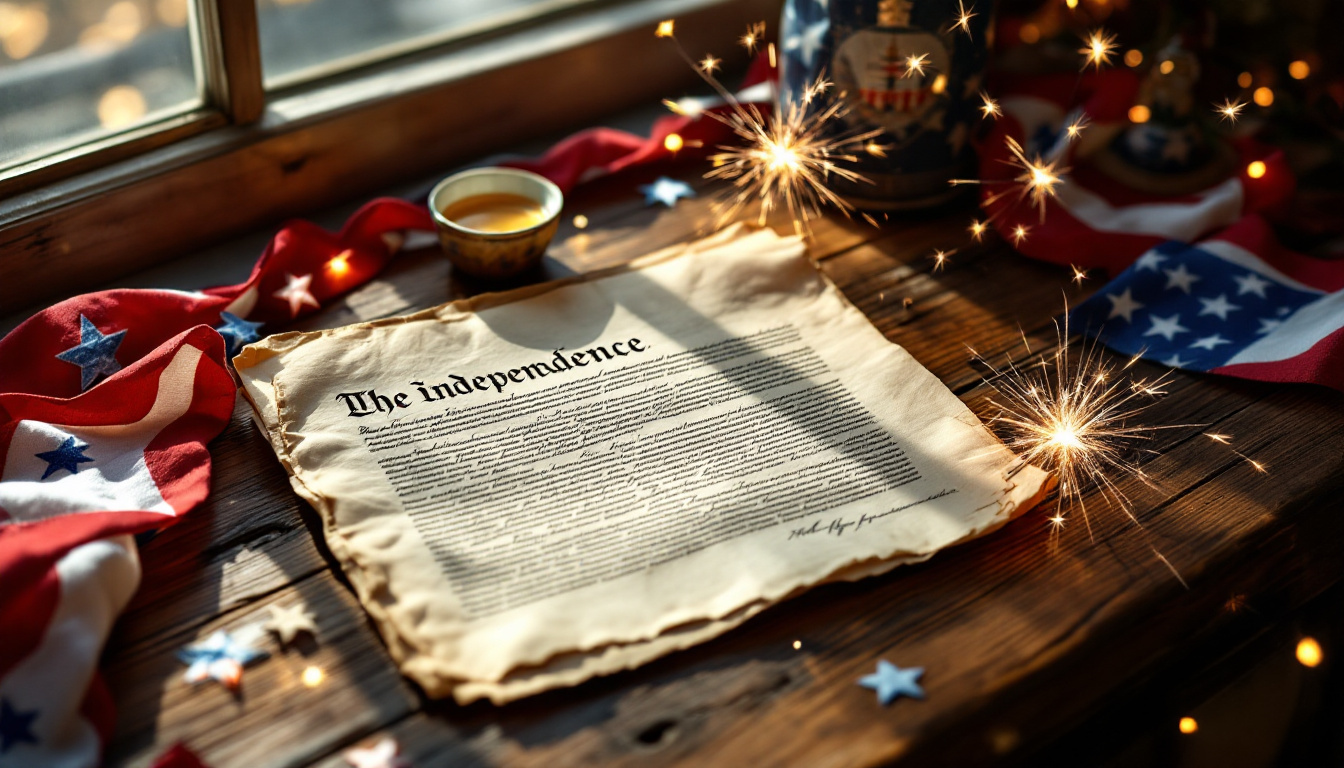
Three percent of Americans think tomorrow's 250th anniversary celebrates the Pilgrims landing at Plymouth Rock. Five percent believe it marks the first presidential election. Eight percent are going with the ratification of the Constitution. And 25 percent just threw up their hands and said they weren't sure.
The correct answer — the adoption of the Declaration of Independence on July 4, 1776 — stumped nearly half the country.
A new national survey from the Cato Institute, conducted in collaboration with Morning Consult and released this week, polled 2,253 Americans between June 25 and June 26, 2026. The findings are the kind of thing that makes you wonder what exactly we've been funding public schools to do for the last four decades. Forty-six percent of respondents could not identify what America's 250th anniversary commemorates. Only 53 percent got it right.
Among Gen Z — adults under 30 — the numbers crater. Sixty-one percent of Gen Zers had no idea what the country is celebrating this weekend. Just 39 percent could connect the date to the Declaration of Independence.
The ignorance runs deeper than one question. Fifty-seven percent of those surveyed didn't know why the American colonies declared independence from Britain in 1776. Only 43 percent could cite high taxes and a lack of representation in government. Fifty-eight percent couldn't identify the main purpose of the U.S. Constitution — that it exists to establish and limit the powers of the federal government. And when asked which country the 13 colonies declared independence from, 40 percent got it wrong. Four percent said France. Three percent said Canada. Two percent guessed Germany.
Canada.
Emily Ekins, who reported the findings for the Cato Institute, also surfaced a generational split on economic systems that puts the civic ignorance in sharper context. Among Gen Z respondents, 53 percent view socialism favorably compared to just 45 percent who favor capitalism. Thirty-eight percent of Gen Zers under 30 view communism favorably. They can't name the document that founded the republic, but they've got strong opinions about replacing the system it created.
The poll does contain one genuinely strange result. Despite not knowing what we're celebrating, or why, or who we declared independence from, 86 percent of respondents said they're grateful to be American. Seventy-nine percent said they're proud. Seventy-four percent believe the American Dream is available to them personally. A separate Marist University poll found 93 percent of Republicans identify as proud Americans, compared to 45 percent of Democrats.
So we love the house. We just haven't read the blueprints.
The Cato survey also found that 57 percent of Americans believe the country has moved away from its founding principles, and 56 percent worry the United States could stop being a free country within the next 50 years. The top threats they identified: corruption at 30 percent, politicians ignoring the Constitution at 26 percent, and the rich having too much power at 24 percent. When asked what children should learn from the 250th anniversary, the most popular answer was that freedom is rare and must be protected.
That answer would be more reassuring if the adults giving it could explain what the freedom was built on. You can't protect a document you haven't read. You can't defend principles you can't name. And you can't pass down a inheritance you never bothered to inventory.
Here's the part that should keep people up tonight. Forty percent of Americans told Cato they find it acceptable if a president they support stretched the Constitution to achieve outcomes they wanted. Not a fringe. Not a sliver. Four in ten. The same people who can't describe what the Constitution does are perfectly comfortable letting someone bend it.
Seventy percent say the founding principles remain relevant today, per the Cato survey. That's the good news. The bad news is that relevance requires comprehension, and comprehension requires someone — a parent, a teacher, a culture — to do the teaching. Somewhere between the founding and the fireworks, we stopped.
Tomorrow, 330 million Americans will fire up grills, watch parades, and light enough explosives to make a British general flinch. Most of them will mean it. The pride is real. The gratitude is real. The gap between what we feel about this country and what we know about it — that's real too.