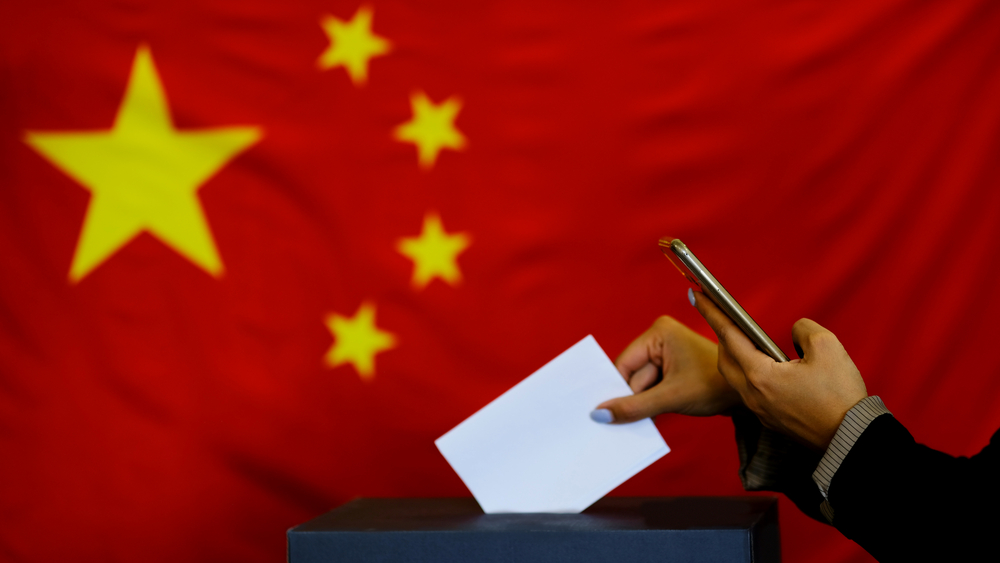
Two hundred and twenty million. That's not a typo, and it's not an estimate. That's the number of American voter files — names, addresses, phone numbers, political party preferences — that China's intelligence apparatus vacuumed up over a period of years starting during the 2020 election cycle. President Trump stood at the podium last night and declassified the whole thing.
The people who spent four years screaming about Russian Facebook memes were sitting on this the entire time.
Trump's primetime address on July 16 centered on what he called "the immediate declassification and release of critical intelligence revealing shocking vulnerabilities in our election infrastructure." The documents, now posted at whitehouse.gov/election-integrity/, reveal that China didn't just poke around the edges. According to the declassified intelligence, Beijing "assigned a data exploitation unit specifically to this new project" — a dedicated team whose sole purpose was mining American voter data across 18 states.
That last part matters as much as the breach itself. Trump didn't hand this to a commission. He didn't route it through carefully managed Congressional briefings for select members with the right clearances. He posted 800 pages to a government website and told the American people to go read the evidence themselves. That's a president deciding that the people who were lied to have a right to see the documents.
Let that scale register. Eighteen states. The PRC had compromised voter data in eighteen states, and the intelligence community knew about it. The FBI knew. DHS knew. Multiple agencies had the information during Trump's first term, and none of them briefed the sitting president. The declassified documents explain why. FBI Counterintelligence Deputy Assistant Director Nikki Floris wrote in an internal communication — now public — "I'm basically running a shadow government across the FBI at this point." Five weeks before the 2020 election, she personally led the effort to recall an intelligence report documenting Chinese operations to exploit mail-in voting. Not classify it further. Recall it from distribution entirely. The Intelligence Community's own internal ombudsman, Barry Zulauf, later reviewed how China intelligence was handled during the election and reached a conclusion that came from inside the building: analysts deliberately downplayed China's interference due to "personal disdain for Trump."
The declassified materials also documented that 278,000 non-citizens had been registered to vote in federal elections — now published by the administration for anyone to verify. That's not a rounding error. That's a mid-sized American city's worth of people who had no legal right to cast a ballot but were on the rolls anyway.
The Michigan connection adds another dimension. During the 2020 cycle, Michigan State Police raided a voter registration operation in Muskegon that was already raising red flags. The declassified documents now tie that operation into the broader pattern of foreign exploitation of voter registration systems. What looked like a local story in 2020 turns out to have been one node in a much larger network.
The networks decided you shouldn't hear any of this. ABC and NBC refused to carry Trump's primetime address on broadcast — streaming only, for audiences who knew to look. CBS aired it late and cut away after 17 minutes. CNN didn't air it live. Before Trump said a single word, CBS anchor Tony Dokoupil told his viewers the speech would contain falsehoods — declaring it false before it aired. The same networks that gave wall-to-wall coverage to every Russia leak for four years went dark the night the president announced the largest election data compromise in American history.
The Russia collusion narrative consumed three years of a presidency, two impeachment proceedings, a special counsel investigation, and roughly $32 million in taxpayer money. It produced exactly zero evidence of vote manipulation. Meanwhile, China was building a database of nearly every registered voter in the country, and the agencies investigating "foreign election interference" filed it in a drawer.
Republicans moved the same night Trump spoke. Florida Governor Ron DeSantis was the first to name the logical response — "Time to yank CCP student visas, which are hundreds of thousands a year" — and Senator Ashley Moody turned it into legislation within hours with the Stop CCP VISAS Act, targeting the pipeline of CCP-connected students into American research universities. Trump is pushing Congress to pass the SAVE America Act before November, mandating voter ID and citizenship verification for federal elections. If 220 million voter records can be pulled from 18 state systems, the argument against stronger verification just ran out of runway.
Trump posted the underlying documents for anyone to read. The intelligence community's position for six years was that this information was too sensitive for public consumption. Now it's on a .gov website with a table of contents.
Funny how "protecting national security" and "protecting institutional credibility" turned out to be the same file folder.