The Consumer Price Index dropped 0.4% month over month — the largest single-month plunge in six years. Gasoline and fuel prices fell nearly 9%. Real average hourly earnings ticked up 0.1% year over year, and real weekly earnings climbed 0.3%.
Somewhere, a cable news economist is quietly deleting old tweets.
The numbers landed Monday morning and immediately torched months of breathless predictions from the credentialed class. Year-over-year inflation sits at 3.5%, still elevated from the pre-Biden baseline but moving in the direction every "expert" swore was impossible under President Trump's tariff regime. The same tariffs that were going to send grocery prices into orbit, crash the economy, and turn America into a cautionary tale for Econ 101 textbooks.
Conservative commentator Eric Daugherty summed it up perfectly: "US inflation just STUNNED the experts and FELL -0.4% month over month, the largest plummet in 6 YEARS." That's not a cherry-picked metric or a seasonally adjusted footnote buried in an appendix. That's the headline number, doing the exact opposite of what we were promised.
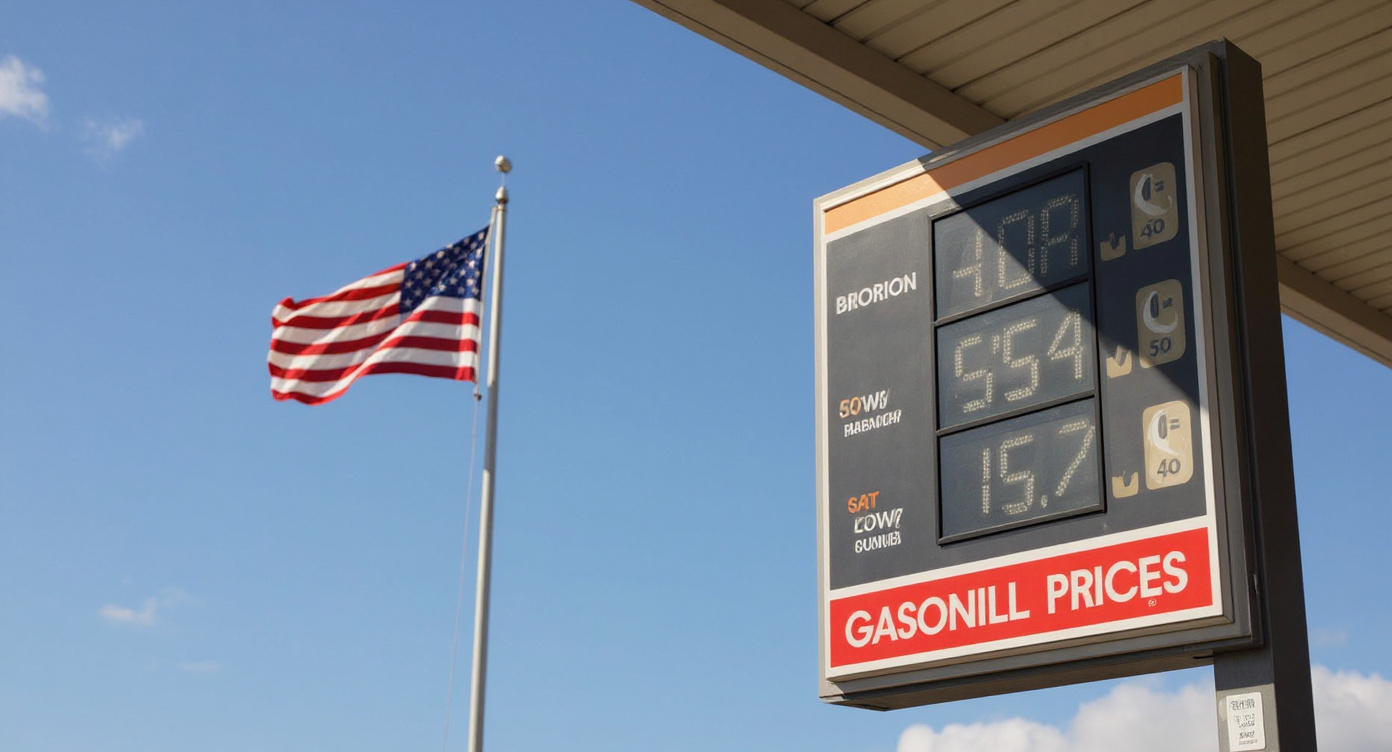
The gasoline figure is where the narrative really falls apart. M.A. Rothman pointed out the obvious: "Gas down nearly 10% the same month we bombed Iran. The '$7 a gallon war' the experts promised never showed up." Remember that one? Every foreign policy analyst with a blue checkmark and a Substack was absolutely certain that military action against Iran would send energy prices through the ceiling. Gas was supposed to be the thing that finally turned Trump voters against him. Instead, fuel costs dropped nearly 9% in a single month.
The tariff argument was always built on a particular kind of confidence — the kind that substitutes credentials for evidence. The theory went like this: tariffs are a tax on imports, therefore prices must rise, therefore inflation must spike, therefore Trump is an economic illiterate who doesn't understand basic supply and demand. Clean. Simple. And, as of Monday's CPI release, wrong.
What the models never accounted for was the possibility that markets would adapt. That supply chains would shift. That domestic production incentives baked into the tariff structure might actually function as designed. The "experts" treated the economy like a freshman problem set with one variable, and the economy politely declined to cooperate.
Now, 3.5% year-over-year inflation is not some golden number worth framing on the wall. It's still above the Fed's 2% target, and groceries aren't exactly cheap. Nobody's throwing a parade because eggs cost what they cost. But the trajectory matters. The direction matters. And the direction is the one every Ivy League economist with a podcast said was structurally impossible under current trade policy.
The standard response from the prediction-industrial complex will be some version of "this is transitory" or "wait until the lagging indicators catch up" — the same rhetorical escape hatch they've been pulling since 2025. At some point, the lag has to stop lagging. At some point, the disaster that's always six months away has to either arrive or get acknowledged as the phantom it always was.
Real wages are up. Gas is down. The month-over-month inflation number just posted its sharpest decline since 2020.
The experts didn't get the timing wrong. They got the story wrong. And the difference matters, because one is a forgivable miscalculation and the other is a framework that doesn't describe the world it claims to understand.