Jared Isaacman, the former astronaut Trump tapped to run NASA, just said out loud what the entire defense establishment has been whispering for years. We are "very much in a space race right now" against China.
Not a metaphorical one. Not a budget-line competition between bureaucracies. An actual race to plant boots on lunar soil.
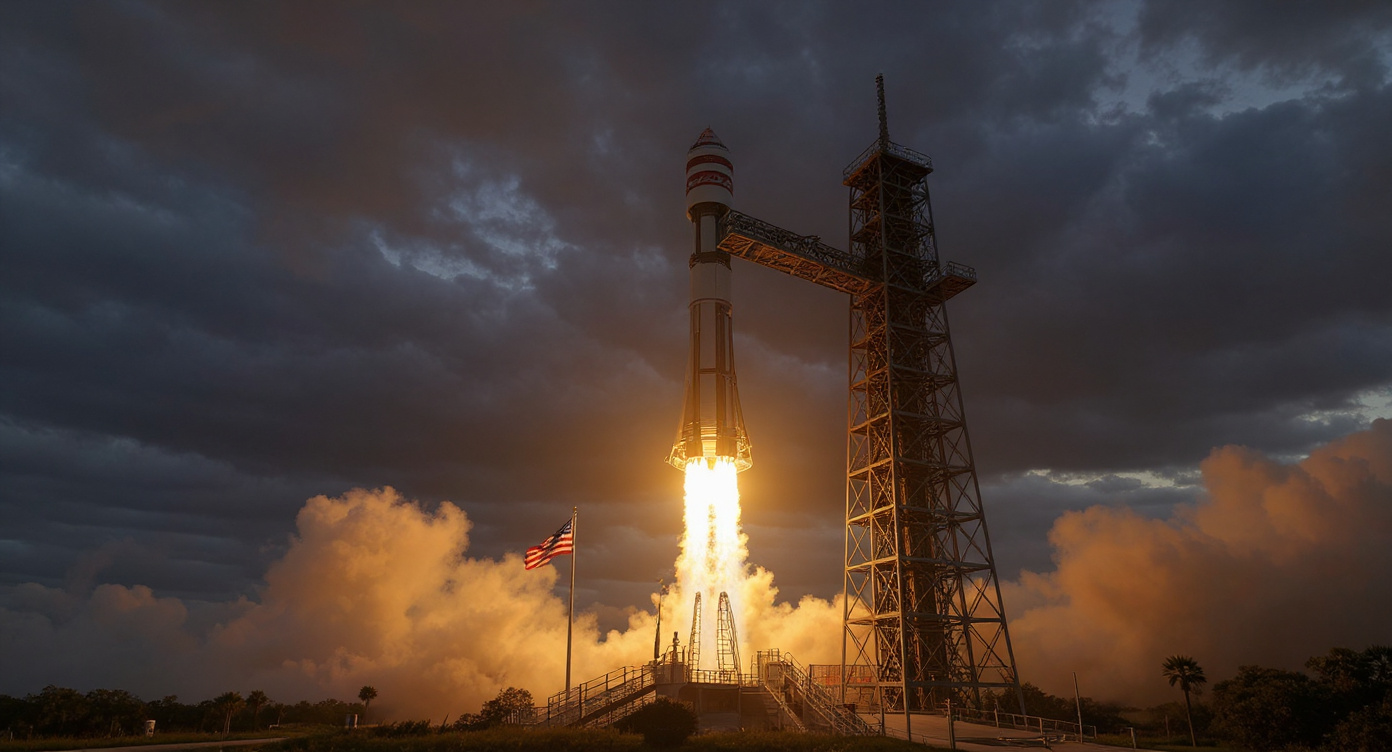
Isaacman's bluntness is a departure from the last decade of NASA administrators who spoke in the careful, committee-approved language of "international cooperation" and "peaceful exploration." Those guys treated the space program like a TED Talk. Isaacman treats it like a deadline. The NASA head laid out the timeline in stark terms: Artemis II already looped four astronauts around the moon in April, Artemis III launches next year, and the goal is American boots back on the lunar surface by 2028.
"The Chinese are moving at incredible speeds, and they are certainly capable of doing what the Soviets were not," Isaacman said. That's not a throwaway line. The Soviet Union could never match American industrial capacity. China can. They've got the manufacturing base, the engineering talent, and the political will to sustain a multi-decade program without getting distracted by election cycles.
"The Chinese will land their taikonauts on the moon. There's no question," Isaacman added. The only question, he said, is "will the United States return before them, and will we do so in a different way."
That "different way" is the interesting part. Isaacman isn't just talking about flags and footprints. He's describing permanent infrastructure — a lunar base that by the "early 2030s" will operate like "the International Space Station," with crews on extended rotations and a monthly mission cadence starting in 2027. Landers, lunar terrain vehicles, and the kind of sustained presence that turns a destination into a territory.
"You're going to see the three most powerful rockets in the world," he said, referencing the hardware pipeline NASA is building for Artemis IV and beyond.
The contrast with his predecessors could not be sharper. For years, NASA's public messaging was about inclusion metrics and climate studies. The agency that put men on the moon was spending more time talking about its carbon footprint than its launch manifest. Meanwhile, China was quietly building a modular space station, testing lunar landers, and training a corps of taikonauts with one objective: get there and stay.
Now there's a guy running NASA who has actually been to space — not as a passenger on a government-funded junket, but as commander of private missions he helped fund and organize. He knows what the hardware can do because he's sat on top of it.
The usual objection from the credentialed class is that "space race" framing is dangerously competitive and risks "militarizing" the heavens. These are the same people who said the original space race was reckless, right up until Neil Armstrong's boot print became the most unifying image in American history.
China isn't building a moon program because they're curious about geology. They're building it because whoever controls cislunar space controls the high ground for the next century of human civilization — communications, resources, military positioning, and the kind of national prestige that shapes alliances. Beijing understands this. Isaacman understands this.
The question is whether Congress will keep writing the checks and staying out of the way, or whether the program gets slow-walked by appropriations committees who'd rather fund another round of EV subsidies.
Artemis II flew in April. Artemis III launches next year. The 2028 landing target is aggressive but achievable. A permanent lunar base by the early 2030s would be the most significant American infrastructure project since the Interstate Highway System — except this one sits a quarter-million miles away.
China has a plan and the discipline to execute it. For the first time in a long time, so does NASA.