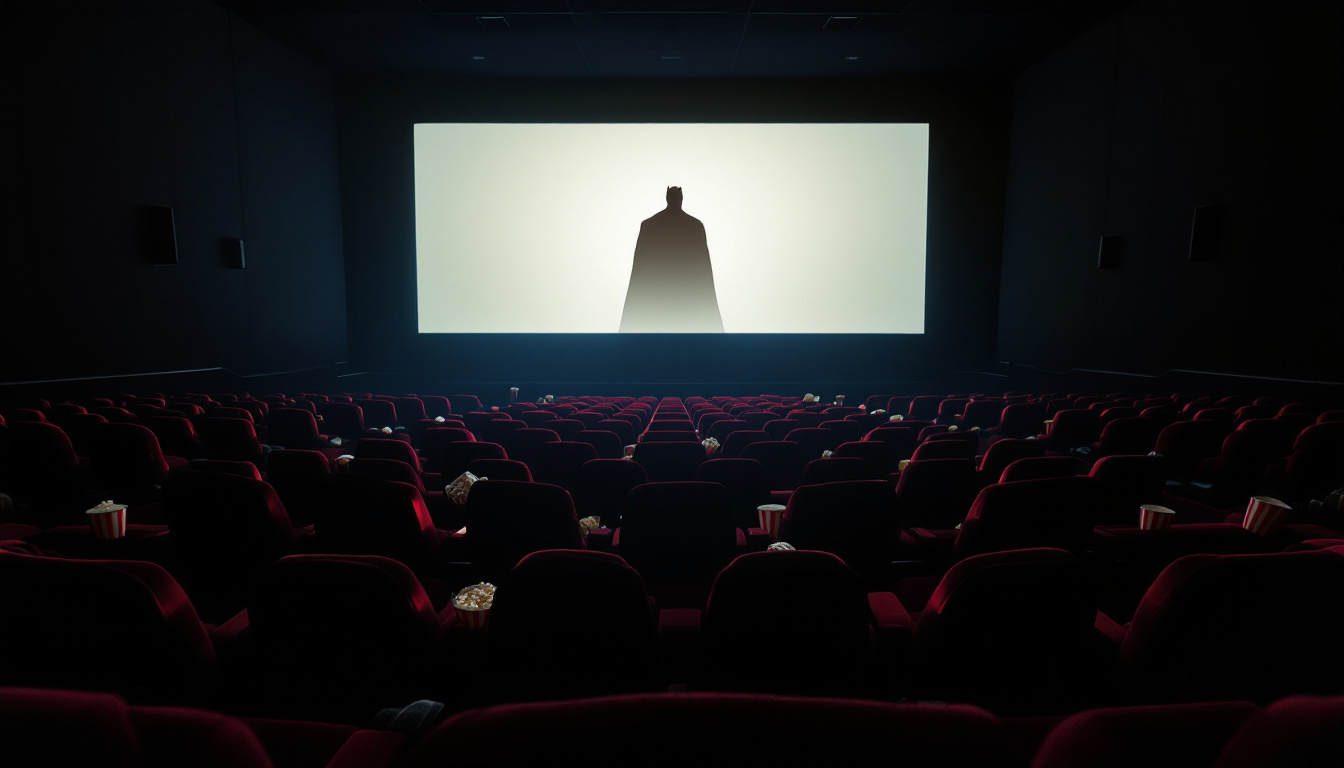
Supergirl opened to $38 million against a production and marketing budget north of $170 million. For those keeping score at home, that's the kind of return that gets studio accountants day-drinking by Tuesday.
But don't worry — it's your fault.
Milly Alcock, the film's lead actress and a genuine talent from HBO's House of the Dragon, sat down with Vanity Fair before the numbers came in and delivered a preview of the excuse reel. "It definitely made me aware that simply existing as a woman in that space is something that people comment on," she told the magazine, framing the pre-release skepticism as garden-variety sexism rather than, say, audiences tired of being lectured.
She doubled down with Variety: "I didn't even say 'men' — I said 'people!' And they got so angry. I was like, 'You're proving my point.'" The logic is airtight if you don't think about it. People who don't want to pay $15 to watch a movie are angry. Their refusal to buy tickets proves they're the problem. The product is beyond criticism because the criticism itself is evidence of bigotry.
We've seen this movie before — figuratively, since audiences clearly aren't seeing the literal ones.
As Megyn Kelly pointed out on Episode 1,349 of The Megyn Kelly Show, the studio also made sure to announce that Alcock's Kara Zor-El would be queer. Kelly's summary was efficient: "She's got to let us know that her character is queer." Not because the story demanded it. Not because fans of the comics were clamoring for it. Because the checklist demanded it, and the checklist comes first.
Stu Burguiere, host of Predictable with Stu, joined Kelly and landed on the mechanical problem Hollywood refuses to diagnose. "Comic book movies and superhero movies have a largely male audience," he said. This isn't controversial. It's demographic reality backed by decades of ticket-sale data. The core audience for these films is young men. When you spend a press tour telling young men that their opinions are unwelcome and their enthusiasm is suspect, some of them take you at your word and stay home.
Burguiere's final assessment was less diplomatic: "I'm sorry… as of this moment, it is not legally required for me to see the slop."
The Supergirl strategy is a carbon copy of the Rachel Zegler playbook from Disney's Snow White. Zegler spent months before that film's release mocking the original animated movie, dismissing Prince Charming as outdated, and signaling that the new version would correct the sins of 1937. The target audience responded by finding something else to do on opening weekend. The pattern is now so predictable it should have its own Wikipedia entry: cast a capable actress, hand her a script nobody asked for, redesign the character to satisfy an internal ideology checklist, send her on a press tour where she preemptively attacks the ticket-buying public, then act baffled when the ticket-buying public declines to participate.
The DC Universe needed Supergirl to work. Warner Bros. has been trying to rebuild its superhero franchise from the rubble of the Snyderverse for years. This was supposed to be proof of concept — evidence that the new creative direction could produce hits. Instead it produced a $38 million opening that won't cover the catering budget by the time international receipts and streaming residuals are tallied.
Hollywood's defenders will point out that superhero fatigue is real, that audiences are oversaturated, that the theatrical model is struggling against streaming. All fair. But fatigue is selective. Audiences still showed up in enormous numbers for films that didn't treat them like obstacles to be overcome. The franchises that are dying are the ones that stopped asking what the audience wanted and started telling the audience what it should want.
The $170 million question isn't whether Supergirl is a good movie. Maybe it is. Alcock is talented. The source material has seventy years of stories to draw from. The question is why the people responsible for spending $170 million keep choosing a marketing strategy built on contempt for the only people who can make that money back.
A $38 million opening on a $170 million budget. A lead actress who thinks the audience's disinterest proves their moral failing. A studio that added identity signaling to the character sheet before bothering to write a compelling story.
At some point, the pattern stops being bad luck and starts being a business decision.