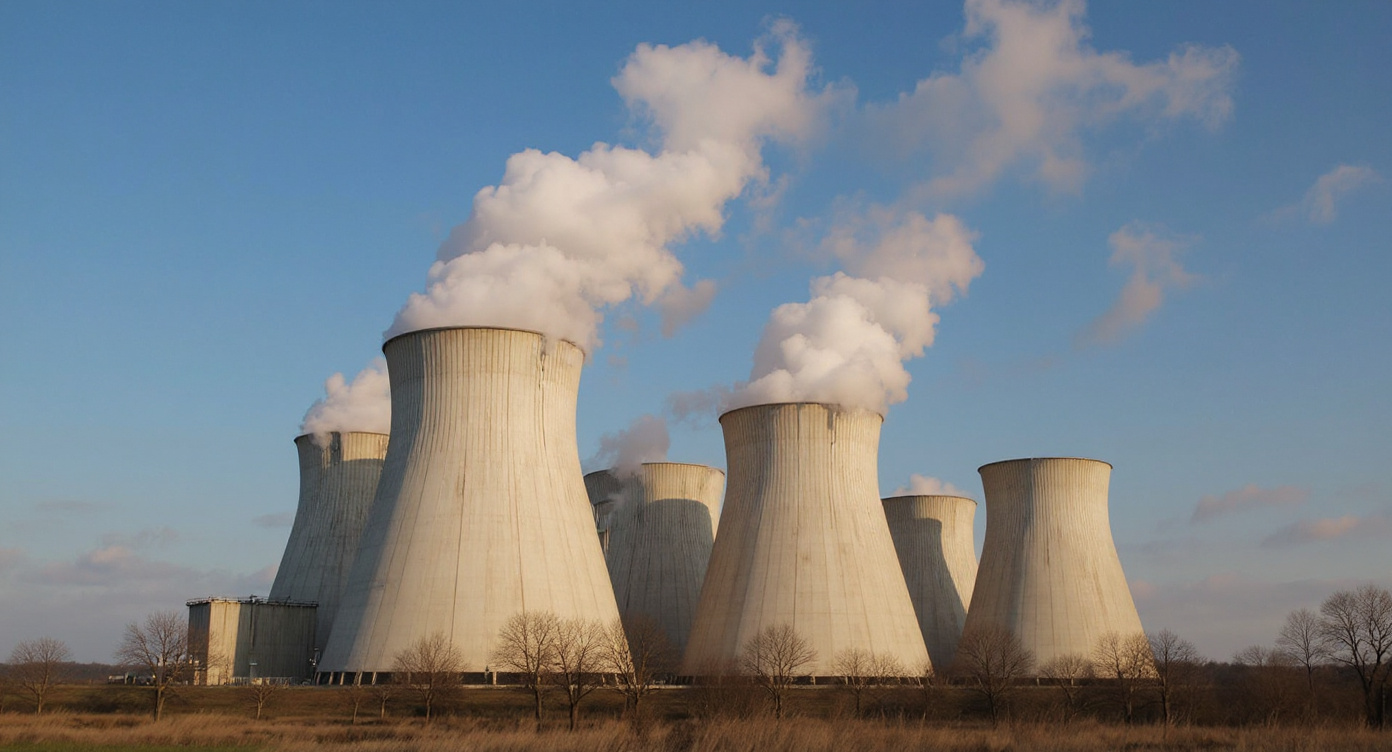
China has 40 nuclear reactors under construction right now. The United States had zero new ones in the pipeline.
Energy Secretary Chris Wright just changed that. The Trump administration announced $17.5 billion in low-interest federal loans to fund new nuclear reactor construction across the United States — the most significant federal commitment to nuclear energy in decades. No climate conference. No bold vision speech delivered to delegates who flew private to hear it. Just $17.5 billion, moving toward reactors.
The program funds five loans for paired two-reactor projects using Westinghouse Electric's AP1000 design, each producing 1,100 megawatts. Ten reactors total. Seven utilities have already signed letters of intent, with the goal of bringing them online by 2035. Wright said the financing structure is designed to cut construction timelines by up to three years while reducing costs — which matters, because cost and time are exactly what killed America's last attempt at this.
The last nuclear project completed in the United States — Vogtle Units 3 and 4 in Georgia — took a decade, ran billions over budget, and became a cautionary tale before Unit 3 finally entered commercial service in July 2023 and Unit 4 followed in April 2024. Westinghouse CEO Dan Sumner said the new program "really kick-starts fleet-scale nuclear development in the United States." Fleet-scale only works if the next ten reactors don't become ten more Vogtle stories.
The timing isn't accidental. Hyperscaler data-center spending is projected to hit $800 billion this year, and those server farms need reliable baseload power. You can't run an AI data center on sunshine and good intentions. Nuclear delivers power 24 hours a day, seven days a week, regardless of whether the wind is blowing or the sun is out — and it does it with zero carbon emissions.
Which raises a question worth sitting with: where was the environmental movement for the last twenty years?
The same people who declared climate change an existential crisis spent two decades shutting down nuclear plants, blocking permits, and insisting the grid could run on renewable ambition. Germany tried it. They ended up burning more coal. California tried it. They got rolling blackouts. France kept its reactors. France has some of the cheapest, cleanest electricity in Europe — and somehow nobody in the climate movement ever mentions France.
Russia has 6 reactors under construction. India has 8. China has 40. The United States invented this technology. We split the atom. Then we spent a generation letting activists and regulators strangle the industry while our competitors built the future.
The $17.5 billion program doesn't need congressional approval. It runs through existing Department of Energy lending authority — the same authority that has been sitting on the shelf, available, for years. No filibuster. No committee markup. No six-month negotiation with a senator who wants a highway interchange named after him in exchange for a vote. Wright signed off, the loans are moving, and the first reactors could break ground within the year.
The people who said we needed to follow the science spent two decades ignoring the science on nuclear. The people who called carbon emissions an existential threat fought the only proven zero-carbon baseload technology on the market.
Now the administration that supposedly doesn't believe in climate change just made the largest single investment in clean energy infrastructure in a generation.
It just happens to be clean energy that actually works.