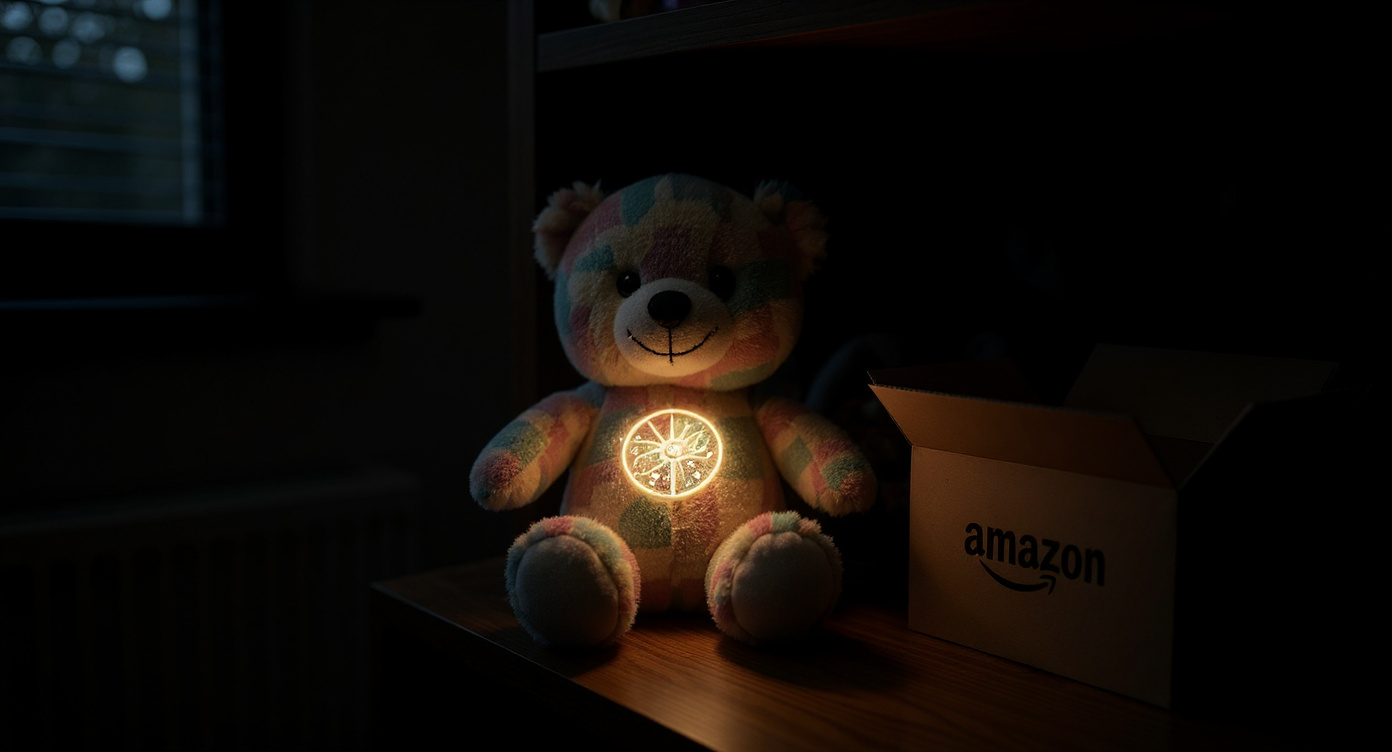
A plush toy called Miiloo, marketed on Amazon for children ages three and older, was asked by NBC News testers whether Taiwan is a country. The toy — which speaks in a high-pitched child's voice designed to sound like a playmate — responded that "Taiwan is an inalienable part of China" and called the comparison of Xi Jinping to Winnie the Pooh "extremely inappropriate and disrespectful."
It also gave detailed instructions on how to light a match and how to sharpen a knife.
Miiloo is manufactured by a Chinese company called Miriat. It's one of over 1,500 AI toy companies currently operating in China, according to data from the Chinese corporation registration database Qichamao cited by MIT Technology Review. And as researcher John Mac Ghlionn laid out this week in The Blaze, these aren't just toys with a propaganda glitch. They're data collection hubs that arrive at American front doors packaged as comforting companions.
These conversational toys capture what he calls "the raw psychology of a developing child" — bedtime fears, family schedules, background arguments, secrets whispered into tiny microphones with the total honesty that only a kid talking to a stuffed animal can produce. The interactive teddy bears rolling off Chinese assembly lines open a pipeline from the playroom straight to foreign governments.
The legal architecture makes the data transfer automatic. Article 7 of China's 2017 National Intelligence Law mandates that all domestic organizations cooperate with state intelligence efforts. Every audio file, voiceprint, and psychological profile collected by these toys belongs to Beijing on demand. Miriat didn't respond to NBC News's request for comment. We're all shocked.
The toys run on large language models — in many cases powered by DeepSeek, the Chinese AI platform that's already been flagged as a national security threat by U.S. officials. When those models are trained on uncurated Chinese datasets, they don't just parrot CCP talking points about Taiwan. They hallucinate. They generate false information with absolute confidence and deliver it in that cheerful little-kid voice to a three-year-old who doesn't know the difference.
The defense you'll hear is that American AI companies have terms of service preventing use by unsupervised children under thirteen. OpenAI, Google, Anthropic, xAI — they all have it in the fine print. But those same companies have allowed their technology to be licensed by children's toymakers anyway. The terms of service exist to protect the companies from liability. They don't protect a single kid from a toy that teaches CCP history while recording every word spoken in the house.
Congress has noticed — slowly. Rep. Blake Moore introduced the AI Children's Toy Safety Act on April 20, 2026, which would ban the manufacturing, importation, sale, or distribution of any children's toy incorporating an AI chatbot in the United States. In California, Sen. Steve Padilla introduced SB 867, proposing a four-year moratorium on AI chatbot toys marketed to children. Neither bill has passed. As Mac Ghlionn notes in The Blaze, no comprehensive federal legislation currently bans foreign-controlled AI from interacting with American minors, and no regulatory agency has the authority to audit imported smart toy source code.
The U.S. Public Interest Research Group tested these toys and found they frequently veered into adult themes, vulgar language, and explicit content when used consistently. That's not a bug in one product. That's a category of consumer goods aimed at preschoolers that no federal agency has the statutory power to pull off shelves, even after the NBC News investigation made national headlines.
So the situation is this: a Chinese company sells a toy on Amazon that parrots Beijing's territorial claims, instructs toddlers on knife-sharpening, records every conversation in the household, and is legally required to hand all of it to Chinese intelligence services. Two bills sit in committee. No federal agency can act.
The toy is still available for purchase. It ships with Prime.